
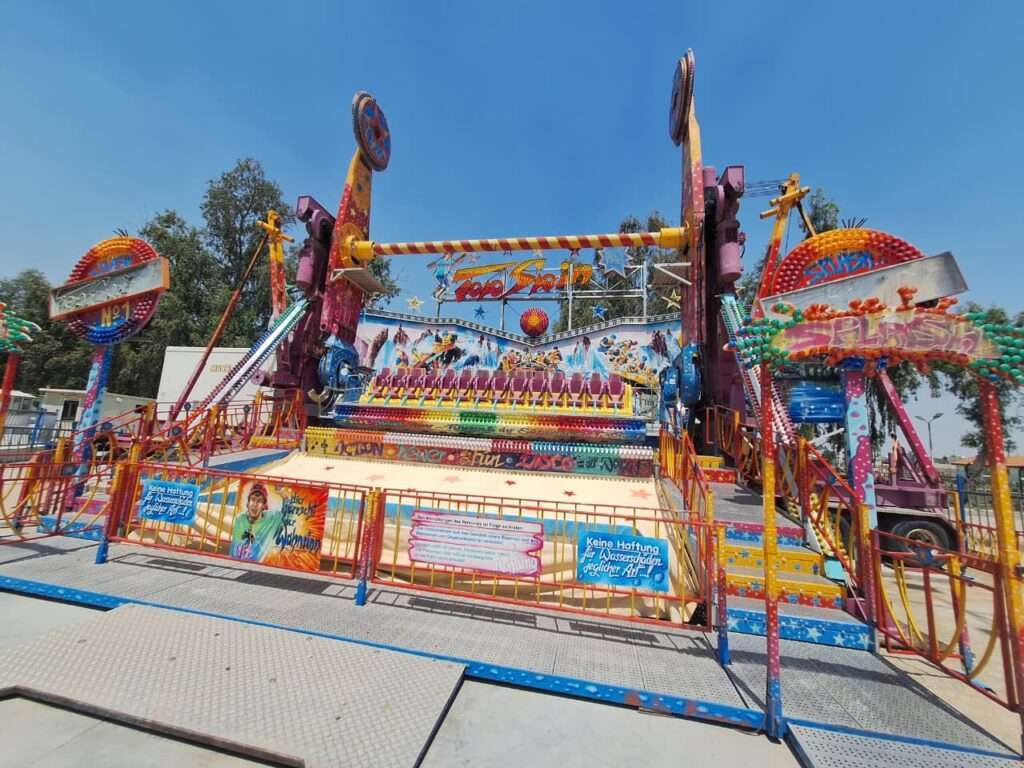
Carnival and fair operators work to a different rulebook than fixed
parks. Your rides travel, set up in a weekend, run hard for a few days,
then tear down and move to the next town. That mobile, high-intensity
life shapes everything about what you should buy, and it is exactly why
so many operators shop the used market for used carnival rides
for sale rather than ordering new.
The used market lets you put a proven, crowd-pulling attraction on
your midway for a fraction of the price of new, and often have it
earning within weeks instead of waiting out a long factory lead time.
But carnival rides have their own buying traps: transport-worn
structures, missing road permits, and rides that look fine parked but
were never built for constant assembly and disassembly. This guide walks
through what carnival operators specifically need to know before they
buy in 2026.
Carnival
rides vs amusement park rides: the real difference
People use the terms loosely, but for a buyer the distinction
matters. An amusement park ride is usually a permanent installation,
bolted to a concrete foundation and built to stand in one place for
decades. A carnival ride, also called a fairground ride or portable
ride, is engineered to be taken apart, loaded onto trailers, driven to a
new site, and reassembled quickly, often in a single day.
That portability changes the engineering. Portable rides fold,
telescope, or break into trailer-sized sections, and their structures
are designed to handle the repeated stress of assembly, road vibration,
and teardown. A park ride of the same model is often heavier, less
travel-friendly, and far harder to relocate. So when you shop, do not
just look at the ride type, confirm it is genuinely a portable or
trailer-mounted version built for the road. Buying a park-spec ride and
trying to run it as a traveling attraction is a costly mistake.
Why buy used
carnival rides instead of new
Operators choose used for three practical reasons.
Price. A used carnival ride typically costs a large
fraction less than the same ride new. For an operator building a route
or replacing an aging unit, that gap can be the difference between
adding one ride or three.
Speed to revenue. New rides from major manufacturers
can carry long lead times. A used ride that has been inspected and is
road-ready can be working your dates this season rather than next.
Proven draw. A used ride has a track record. You can
see how it performed for the previous operator and how the crowd
responded, information you simply do not have with a model fresh off the
line.
The catch, as always, is that these benefits depend on buying a sound
ride. A cheap unit that fails to pass inspection or breaks down on a
peak Saturday is no bargain. You can see the kind of inspected,
road-ready stock that moves through the market on our used rides for sale
page.
The main
types of used carnival rides on the market
The traveling market covers the full spread of attractions, sized and
built to move:
- Family rides such as carousels, convoy and train
rides, tea cups, and mini coasters that pull a wide age range and anchor
the family end of the midway. - Thrill rides including top spins, drop towers,
frisbee and pendulum rides, and spinning rides that bring in teenagers
and adults. - Major draws like Ferris wheels and samba towers
that act as a visible landmark and pull people across the fairground
toward your stand. - Kiddie rides that are cheap to transport, quick to
set up, and reliably profitable at family-focused events.
The right mix depends on your events. A small county fair needs a
different lineup than a large traveling show, which is why most
operators build a balanced package rather than chasing one big
machine.
Are portable
carnival rides cheaper to own?
On the purchase price, a portable ride and a park version of the same
model are often in a similar range, but the total cost of ownership
tells a more useful story. Portable rides are built to move, so they
tend to be lighter and faster to set up, which lowers your labor and
transport costs over a season. A park ride, by contrast, may be cheaper
to buy as a static unit but punishing to relocate.
The smarter comparison is always total cost, not sticker price.
Factor in transport between sites, the crew and hours needed to set up
and tear down, ongoing maintenance, and the cost of any refurbishment
the ride needs before it is route-ready. A slightly pricier ride that
sets up in half the time and rarely breaks down will usually out-earn a
cheap unit that eats labor and downtime.
How fast can
you set up a portable carnival ride?
Setup time is one of the most important numbers for a traveling
operator, because every hour spent building is an hour not selling
tickets. Well-designed portable rides are engineered for speed. Many
kiddie and family rides can be set up by a small crew in a few hours,
while larger thrill rides and major attractions take longer and need
more hands.
The exact time depends on the ride, the crew size, and the site, but
the principle is constant: the faster a ride goes up and comes down
safely, the more dates it can work and the more it earns. When you
evaluate a used ride, ask the seller for the real-world setup and
teardown time and the crew it requires. A ride that needs a day and a
large team to build will limit how many events you can run.
Used carnival rides side by
side
| Factor | Portable / carnival ride | Park-installed ride |
|---|---|---|
| Built to travel | Yes, folds or breaks into trailer sections | No, fixed installation |
| Setup and teardown | Fast, designed for it | Slow, not intended to move |
| Foundation | Self-supporting or pad | Permanent concrete |
| Best for | Fairs, carnivals, traveling shows | Fixed parks and FECs |
| Relocation cost | Built into the design | High and difficult |
| Road permits | Required, part of operating | Usually not applicable |
The table makes the point: for a traveling operator, a purpose-built
portable ride is almost always the right call, even if a park version of
the same ride shows up cheaper.
Do carnival rides need
different permits?
Yes, and this is where traveling operators carry extra responsibility
compared with fixed parks. Beyond the safety certification every ride
needs before it carries the public, carnival operators usually deal with
transport and oversize-load permits to move rides on the road, plus
event or site permits and a fresh safety inspection at many of the
jurisdictions they travel into.
Requirements vary widely by country, state, and even county, and they
can change from one event to the next. Industry bodies such as the Outdoor Amusement Business Association
are a useful reference point for operators navigating safety and
regulatory expectations in the traveling sector. The practical takeaway
is simple: build permit and inspection lead times into your calendar,
because a ride that cannot legally open on the date it is booked earns
nothing.
What ride sells best at
fairs?
There is no single winning ride, because the best earner depends on
your crowd. At family-heavy county fairs, a well-presented carousel, a
convoy or train ride, and a cluster of clean kiddie rides often deliver
the most reliable, steady ticket flow across a long day. At events with
a younger, thrill-seeking crowd, a top spin, a drop tower, or a
frisbee-style ride can become the headline that defines your midway.
The operators who do best usually run a balance: a visible major
attraction to pull the crowd in, a couple of strong thrill rides for
repeat riders, and a dependable bank of family and kiddie rides that
keep tickets moving all day. Rather than betting everything on one
machine, build a lineup that matches the events you actually work.
How GT Amusement
helps carnival operators
GT Amusement buys, inspects, refurbishes, and sells used amusement
and carnival rides to operators worldwide from our base in the UAE.
Every ride is described honestly by condition, we can arrange
independent inspection and non-destructive testing on critical
components, and through our ride refurbishment
service we can bring a ride back to safe, presentable, road-ready
condition before it ships. We handle dismantling, secure loading, and
export documentation, and we can advise on reassembly at your site. If
you want to talk through a package for your route, get in touch with our
team and tell us the events you run.
Frequently asked questions
What’s the difference between carnival and amusement park
rides? A carnival or fairground ride is built to travel, it
folds or breaks into trailer-sized sections so it can be moved between
events and set up quickly. An amusement park ride is usually a permanent
installation bolted to a concrete foundation and built to stay in one
place. Same ride type can exist in both forms, so always confirm you are
buying a genuinely portable version if you travel.
Are portable carnival rides cheaper? On purchase
price they are often similar to a park version, but portable rides
usually cost less to own over a season because they are designed to set
up fast and move efficiently, lowering labor and transport costs. Always
compare total cost of ownership, including transport, setup crew,
maintenance, and any refurbishment, rather than the sticker price
alone.
How fast can you set up a portable ride? It depends
on the ride and crew, but portable rides are engineered for speed.
Smaller kiddie and family rides can often be set up by a small crew in a
few hours, while larger thrill rides and major attractions take longer
and need more hands. Ask the seller for real-world setup and teardown
times before you buy.
Do carnival rides need different permits? Yes. On
top of the safety certification every ride needs, traveling operators
usually need transport and oversize-load permits to move rides, plus
event or site permits and often a fresh inspection in each jurisdiction.
Requirements vary by location and change between events, so build permit
and inspection lead times into your schedule.
What ride sells best at fairs? It depends on the
crowd. Family fairs reward carousels, train and convoy rides, and clean
kiddie rides with steady all-day ticket flow, while younger crowds
respond to a top spin, drop tower, or frisbee ride as the headline. The
strongest operators run a balanced lineup rather than betting on one
machine.
Ready to build your route? Browse our inspected,
road-ready stock and ask our team for a quote on a portable ride package
built around the events you run.