
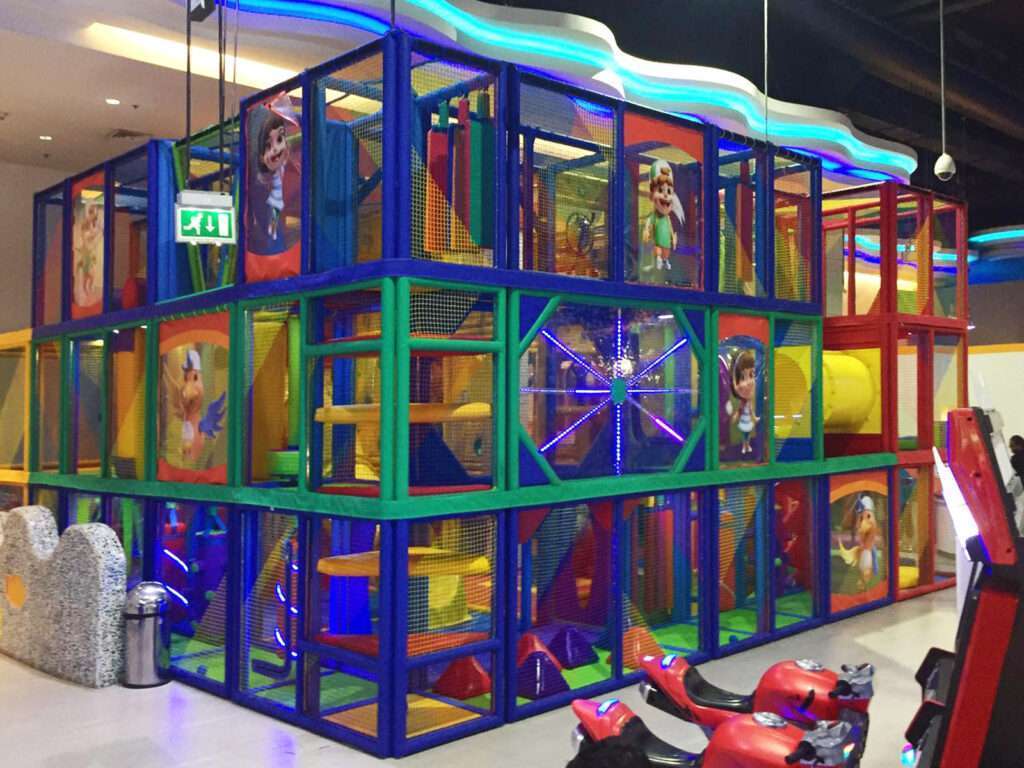
Soft play equipment is the padded climbing frames, slides, ball pools and foam obstacles that children use inside a mall, cafe or family entertainment center. It is built on a steel frame, then wrapped in foam and covered in wipe-clean vinyl, so children can climb, slide and tumble without hard surfaces around them. This guide explains the main types, what a project costs, which safety standards apply and how to plan the space. It also covers when used equipment makes sense.
GT Amusement sells a fully themed Soft Play Area and the Foam Factory, an indoor foam play attraction, alongside our used European rides. Everything currently available is on the used rides list.
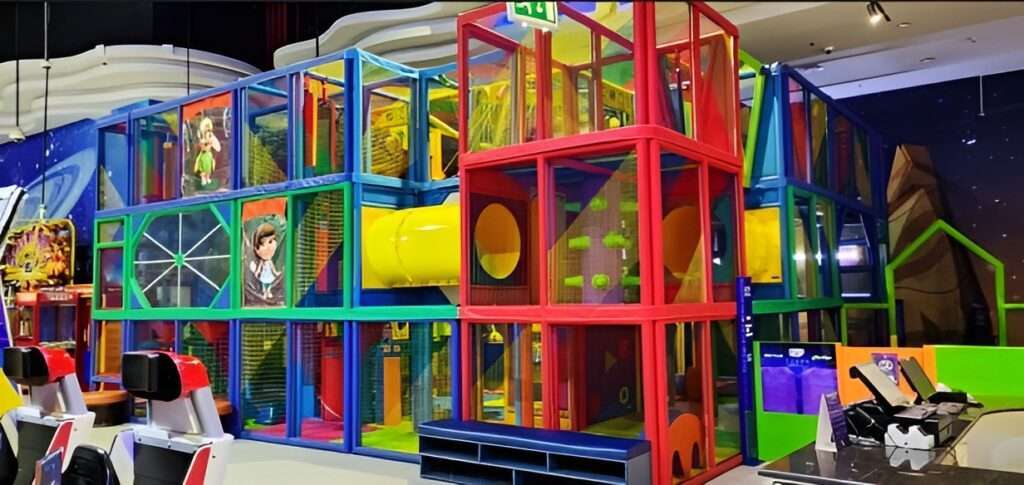
What is soft play equipment made of?
Almost every structure uses the same layers, and those layers decide how long it lasts.
- Steel frame. Galvanized or powder-coated tube carries the load and sets the height of the structure.
- Foam padding. Foam wraps every post and clamp that a child could reach, so a fall or a bump stays soft.
- Vinyl cover. Thick PVC keeps the foam clean. It also takes the wear, so it is usually the first part to replace.
- Safety netting. Netting closes the sides of every level, which keeps children inside the structure while staff can still see them.
- Impact flooring. Padded mats or foam tiles cover the floor under and around the frame.
Types of soft play equipment
Most venues combine several of the following types, because each one suits a different age and a different budget.
Multi-level play frames
This is the main structure in most venues. Children climb through two to four levels of tunnels, nets, bridges and padded obstacles, and they usually finish on a slide. A multi-level frame gives the most play per square meter of floor, so a high ceiling is worth paying for.
Toddler soft play zones
A toddler zone is a low, separate area with large foam shapes, mini slides and small ramps. Older children run fast, so the two age groups need a barrier between them. Parents of very young children also tend to stay longer when a calm zone exists.
Slides
Wave slides, spiral slides and drop slides are the part of the structure that children queue for. Each slide needs a padded run-out at the bottom, so include that floor space in the layout.
Ball pools and foam pits
Ball pools are cheap to add and popular with younger children. However, they take real cleaning work, because the balls must be washed and the pit must be emptied on a schedule. Foam pits work the same way and suit older children who want to jump.
Themed and interactive soft play
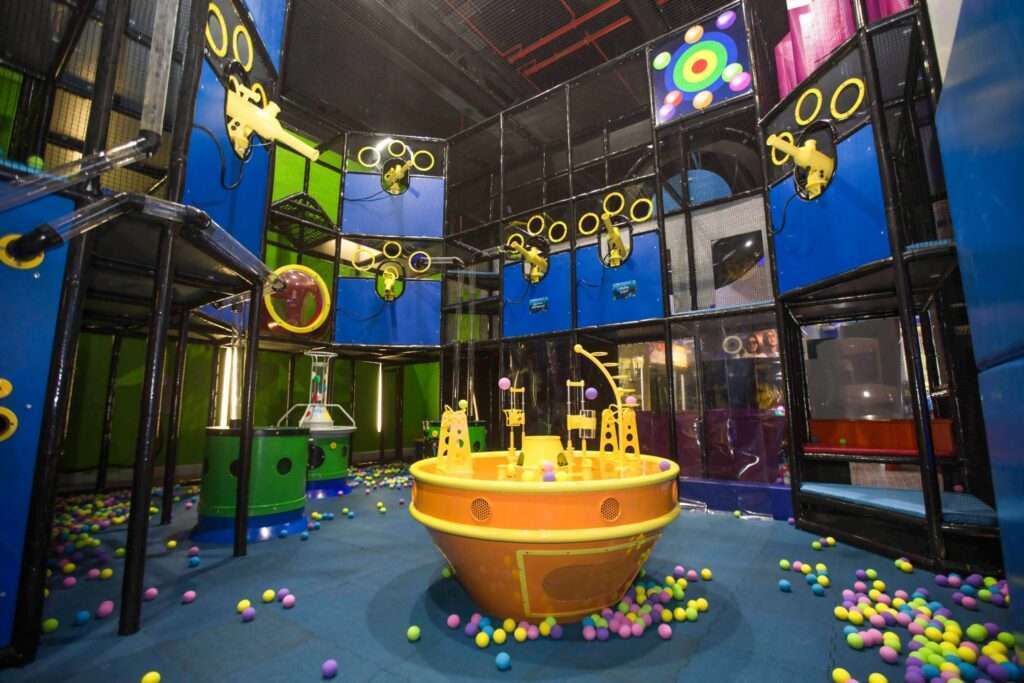
A theme turns a play frame into an attraction that families remember. Interactive features such as foam activities and printed walls add more reasons to return. Our Foam Factory is one example, because it pairs a full indoor theme with interactive foam play.
How much does soft play equipment cost?
Prices depend on size, height and theming, so treat these numbers as rough market guidance and not as a quote. Published supplier guides put the structure alone at about 40 to 120 US dollars per square foot, which is roughly 430 to 1,300 dollars per square meter. Installed projects with design, flooring and theming run from about 50 dollars to more than 250 dollars per square foot, or roughly 540 to 2,700 dollars per square meter.
For example, a 200 square meter play area at those installed rates comes to about 108,000 to 540,000 dollars. That is a wide gap, so the items below matter more than any average.
What pushes the price up
- Height. More levels mean more steel, more netting and more installation time.
- Custom theming. A printed or sculpted theme costs more than standard colors.
- Fire-rated materials. Some countries require fire-rated foam and vinyl, which raises the material cost.
- Shipping and installation. Freight, customs and an installation crew are often quoted separately, so ask whether they are included.
Costs outside the structure
The room needs money too. Budget for air conditioning, lighting, toilets, baby changing, shoe storage, a reception desk, parent seating and a cafe if you plan one. Then add permits and insurance. Our guide to amusement equipment costs covers the same thinking for rides.
Soft play equipment safety standards
Two standards come up most often. In the United States, the reference is ASTM F1918, the safety specification for soft contained play equipment. In Europe, buyers usually ask for EN 1176, and part 10 of that standard covers fully enclosed play equipment.
Your country may apply its own rules on top of these, so check with the local authority before you order. Then ask every supplier for the following items in writing.
- A test certificate that names the standard and the structure you are buying.
- The fire rating of the foam, vinyl and netting.
- The maximum number of children for each zone.
- An installation plan, along with the name of the crew doing the work.
- A daily, weekly and yearly inspection and cleaning schedule.
How to plan a soft play area
- Measure the ceiling first. Ceiling height sets the number of levels, so check it before you ask for a design. Also note beams, ducts and sprinklers.
- Divide the floor by age. Keep toddlers apart from older children, and give each group its own entrance.
- Protect the sight lines. Parents want to see their children from the seating area, while staff need a clear view of every level.
- Control the entrance. One staffed entry point makes payment, capacity counts and shoe storage much easier.
- Plan for cleaning. Leave access for staff to reach every level, and schedule a deep clean when the venue is closed.
New or used soft play equipment?
New equipment fits your room exactly and comes with current certificates. Used equipment costs less to buy, but it was designed for a different room. Therefore, the footprint and ceiling height must suit your site before the price matters.
When you look at a used structure, check these points:
- Vinyl with tears or cracked seams, because damaged covers let dirt reach the foam.
- Foam that has gone flat, since worn padding no longer protects a child.
- Netting and fixings, which should be complete and free of frayed sections.
- Frame clamps and joints, including any signs of rust.
- Paperwork that shows the original certificate and the cleaning history.
The same discipline applies to any second-hand attraction, so our 47 point inspection checklist is a useful starting point.
Soft play equipment in a bigger venue
A soft play zone brings in young families, while other attractions keep older children and teenagers on site. Bumper cars and the XD Theater are common next steps, and our kiddie rides guide covers rides for the youngest guests. If you are still at the planning stage, read our guide to the family entertainment center business plan.
Frequently asked questions
What is soft play equipment?
Soft play equipment is padded indoor play structures for children. It includes climbing frames, slides, ball pools and foam obstacles, built on a steel frame and covered in foam and vinyl.
How much does a soft play area cost?
As rough guidance, installed projects run from about 540 to 2,700 US dollars per square meter, depending on height, theming and materials. A written quote for your room is the only reliable figure.
Which safety standard applies to soft play equipment?
ASTM F1918 is the usual reference in the United States, and EN 1176 with its part 10 is the usual reference in Europe. Local rules can add further requirements, including fire ratings.
How much space does a soft play area need?
There is no fixed minimum. Ceiling height decides how many levels you can build, and floor area decides how many children you can admit at one time. Ask for a layout drawing based on your exact room.
Does GT Amusement sell soft play equipment?
Yes. Our Soft Play Area and Foam Factory are both fully themed indoor attractions. Send your room size through the contact page to ask about them.
The short version
Good soft play equipment starts with the room. Measure the ceiling, separate the age groups, ask for written safety certificates and budget for everything around the structure as well as the structure itself. To see what is available now, visit our used rides list.