
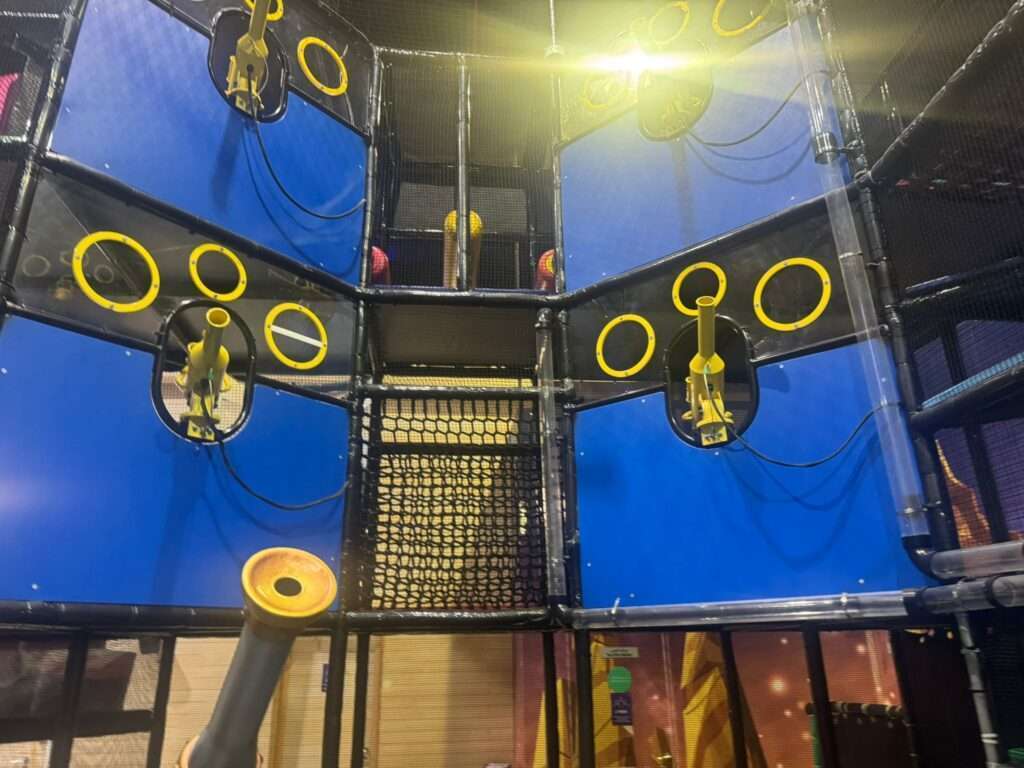
A family entertainment center business plan is the document that shows a lender, landlord or partner what your venue will offer, who will pay for it, what it will cost to open and how long it will take to earn that money back. An FEC is an indoor or outdoor venue built around attractions for families, such as soft play, bumper cars and go-karts. This guide walks through each section of the plan. It does not hand you a template full of invented numbers, because those numbers would mean nothing in your city. Instead, it shows how to work out your own.
GT Amusement sells used and refurbished European attractions, including the Soft Play Area, Bumper Cars and XD Theater. This guide therefore looks closely at the attraction side of the plan. Current stock is on our used rides list.
What goes in a family entertainment center business plan?
Lenders expect the same sections in nearly every plan, so use them as your outline.
- Summary. One page that covers the concept, the location, the total budget and the return you expect.
- Market. Who lives nearby, how many of them have children, and what they do on a weekend now.
- Concept and attractions. What guests will do, and which age groups each attraction serves.
- Site. The building or land, the lease terms, and the access and parking.
- Startup budget. Every cost up to opening day, with quotes behind the large items.
- Revenue model. How guests pay, and what each visit is worth.
- Operations. Staff, opening hours, maintenance, licenses and insurance.
- Financial forecast. Monthly income and costs for at least the first three years.
- Risks. What could go wrong, and what you would do about it.
Start your family entertainment center business plan with a feasibility study
A plan is only as good as the market data behind it. Leisure consultants White Hutchinson warn that generic square-foot estimates understate real budgets, and they advise a proper feasibility study for your own market. Before you spend money on design, gather the following:
- The population within a realistic drive time, along with household income and the age of the children.
- Every competitor in that area, including malls, cinemas, parks and other indoor play venues.
- Local habits, such as school holidays, weekend patterns and the months when heat or cold keeps families indoors.
- Rents and wages for your city, since both differ widely between markets.
Choosing attractions for a family entertainment center
The attraction list drives the footprint, the budget and the revenue, so settle it early. Judge each option on three questions: which ages it serves, how many guests it handles per hour and whether families will come back for it.
- Young children: a soft play equipment zone plus small rides such as the Mini Convoy or Sea World.
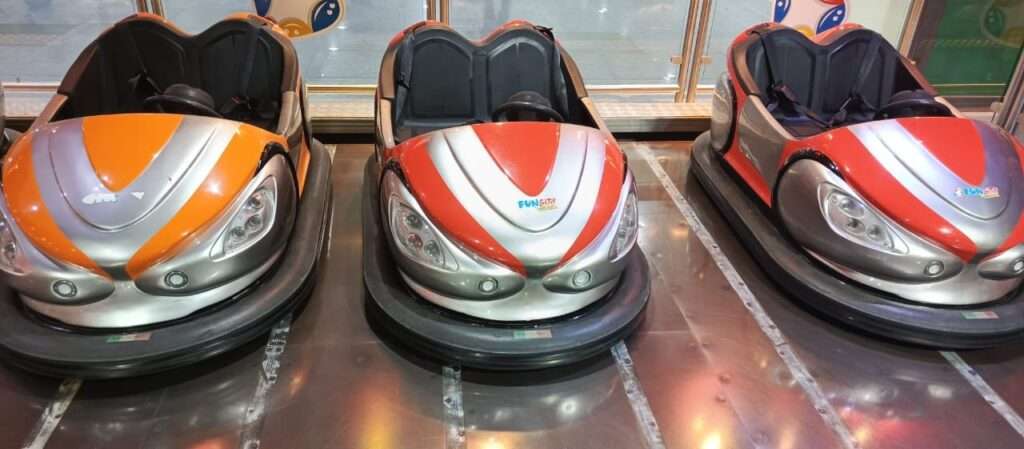
- Families together: Bumper Cars, which parents and children can ride side by side.
- Teenagers and adults: Go-Karts if the site has the room, or the XD Theater if it does not.
Next, check the physical fit. Ride suppliers need your ceiling height, floor loading and power supply, so request those figures from the landlord before you sign. Our guide to types of amusement park rides can help you shortlist.
Site and size
Vendor guides commonly describe an FEC as 15,000 to 50,000 square feet, or roughly 1,400 to 4,600 square meters. However, the right size comes from your attraction list and your market, not from an average. A family entertainment center also depends on easy access, so look at parking, visibility and the other tenants nearby. In a mall, ask how late you can operate and who pays for the air conditioning.
Startup budget for your family entertainment center business plan
List every line, even when the amount is still an estimate. Then replace the estimates with written quotes as the project moves forward.
- Attractions, including any refurbishment.
- Shipping, customs, installation and commissioning.
- Building fit-out, flooring, air conditioning, electrics and theming.
- Kitchen and seating for food and drink.
- Ticketing and point-of-sale systems.
- Licenses, inspections, insurance and professional fees.
- Pre-opening wages, training and marketing.
- Working capital to cover the slow months after opening.
- A contingency line for what you did not foresee.
Our guide to amusement equipment costs covers the ride budget in more detail, and our refurbished vs used guide explains that choice.
Revenue model
Most FECs earn money from several streams, so a good plan shows each one separately.
- Admission: pay per ride, timed passes or a day pass.
- Parties and groups: birthdays, school trips and company events, which fill quiet weekdays.
- Food and drink: a cafe keeps parents on site for longer.
- Memberships: annual or monthly passes, which bring guests back and smooth out income.
How to forecast attraction revenue
Start with capacity, then apply a realistic share of it. The numbers below are an illustration only, so replace each one with your own.
- Riders per cycle: 12 bumper cars with 2 riders each gives 24 riders.
- Cycles per hour: a 5 minute cycle including loading gives 12 cycles, so hourly capacity is 288 riders.
- Daily capacity: 10 opening hours gives 2,880 rides.
- Realistic use: no ride runs full all day, so assume 30 percent, which gives 864 rides.
- Revenue: at 4 dollars a ride, that day earns 3,456 dollars.
Weekdays and weekends behave very differently, so forecast them separately. Also build a low case, because a lender will ask what happens if use is half of your estimate.
Operations, staffing and licensing
Each attraction needs trained operators, and the manufacturer’s manual usually sets the minimum. Write down your opening hours, then calculate the shifts you need to cover them. In addition, include daily inspections, planned maintenance and spare parts. Licensing varies by country, so contact the local authority early and ask which approvals rides need before opening. Insurance should also be quoted before the plan is final, since the premium can change the forecast.
Common mistakes in a family entertainment center business plan
- Copying national averages instead of studying the local market.
- Budgeting for attractions but not for the building around them.
- Opening with no working capital for the first slow season.
- Choosing attractions for one age group only, which shortens the visit.
- Forecasting every day like a Saturday.
- Ordering equipment before confirming the ceiling height and power supply.
Frequently asked questions
What should a family entertainment center business plan include?
It should include a summary, market research, the concept and attraction list, the site, a startup budget, the revenue model, operations, a three year financial forecast and a risk section.
How much does it cost to start a family entertainment center?
There is no reliable single figure, because size, location and attractions change the budget completely. Start from a feasibility study, then build the total from written quotes.
How big should a family entertainment center be?
Vendor guides commonly describe 15,000 to 50,000 square feet. Your attraction list and the local market should decide the size, and ceiling height matters as much as floor area.
What attractions should a family entertainment center have?
Aim to cover young children, families together and teenagers. Soft play, small family rides, bumper cars and go-karts or an XD theater are a common mix.
Can GT Amusement help with the equipment list?
Yes. Send your site size, ceiling height and target audience through the contact page, and we will tell you which attractions from our stock could fit.
The short version
A strong family entertainment center business plan rests on local research, a clear attraction list and a budget built from real quotes. Forecast from ride capacity, keep a low case, and hold back working capital for the first slow season. When you are ready to price the attractions, start with our used rides list.